
The Future is Here: Why Today's Agriculture Students Are Underprepared for Precision Agriculture and How to Fix It
Muhammad Bashir Shuaib
Executive Takeaways & Insights
Traditional agricultural curricula remain anchored in manual practices, leaving graduates unprepared for digital farming toolchains.
Modern food systems require cross-disciplinary fluency across agronomy, spatial GIS, IoT telemetry, and drone aviation.
High equipment costs and slow institutional updates create a severe precision talent shortage across Africa.
Bridging the gap requires industry-academic alliances, intensive experiential fellowships like PAIP, and hands-on simulation labs.
The modern farm is no longer just a field and a tractor; it is a complex, data-driven ecosystem. In the wake of global challenges like climate change, food security, and resource scarcity, the agricultural industry is undergoing a digital revolution. At the heart of this transformation is precision agriculture, a management strategy that uses cutting-edge technology to make farming smarter, more efficient, and more sustainable. This technological leap, however, presents a critical challenge: are today's agriculture students equipped to meet the demands of this new era?
While a new generation of agricultural professionals enters the workforce, they often find themselves underprepared for a world of GPS-guided machinery, remote sensors, and intricate data analysis. The gap between a traditional agricultural curriculum and the skills required for precision agriculture is widening. This isn't just a matter of keeping up with trends; it's a matter of ensuring the future of food production. In this article, we explore why today's agriculture students are underprepared and outline a comprehensive, multi-faceted approach to bridging this crucial knowledge gap.
The New Landscape of Agriculture: Why Today's Agriculture Students Are Underprepared for Precision Agriculture
Precision agriculture, also known as precision farming, is a technological approach to farm management that observes, measures, and analyzes the needs of individual crops and animals. It's about moving away from the "one-size-fits-all" approach to a targeted, site-specific strategy.
This new landscape is defined by a fusion of several key technologies, including:
Geospatial Technology: GPS and GIS (Geographic Information Systems) are foundational. They allow farmers to create detailed maps of their fields, pinpointing areas with different soil types, nutrient levels, or pest infestations. This spatial data is the backbone of all precision applications.
Sensors and Drones: In-ground sensors collect real-time data on soil moisture, temperature, and nutrient content. Drones equipped with multispectral sensors can fly over fields to assess crop health, identify stress, and detect diseases long before they are visible to the human eye.
Variable Rate Technology (VRT): Based on the data from maps and sensors, VRT allows machinery to adjust the application of inputs like seed, fertilizer, and water on the go. Instead of applying the same amount everywhere, VRT delivers a precise amount to a specific location, minimizing waste and maximizing efficiency.
Data Analytics and AI: The sheer volume of data generated by these technologies is immense. Data analytics and artificial intelligence (AI) are used to process this information, turning raw numbers into actionable insights and decision-making tools.
The agricultural professional of tomorrow is not just a farmer; they are a data scientist, a geographer, a systems analyst, and a technician. They must be able to manage this complex technology to increase yields, reduce costs, and operate more sustainably.
The Core Problem: A Mismatch in Education
The primary reason today's agriculture students are underprepared for this digital future is that traditional agricultural education has not kept pace with the rapid evolution of the industry. The curriculum is often rooted in conventional agronomic principles without a strong enough emphasis on the technological and data-driven skills that are now essential.
The Key areas of underpreparedness
1. Lack of a Data-Centric Mindset
For decades, agriculture has been a discipline of practical, hands-on experience and observational knowledge. While this is still invaluable, it's no longer sufficient. Many students are not taught to "think in data." They may understand soil science but lack the skills to interpret a digital soil nutrient map or use predictive analytics to forecast crop yield. The ability to collect, process, and analyze data is a foreign concept in many traditional agricultural programs.
2. Outdated Curricula and Teaching Methods
Many university and technical college programs are slow to adapt their curricula. The foundational courses in crop science, soil science, and entomology are still taught from a largely theoretical perspective. There is often a disconnect between these core subjects and the practical application of new technology. Similarly, the instructional approach may not include enough hands-on, problem-based learning with actual precision agriculture equipment and software. Without a solid curriculum, students can graduate with a degree in agriculture but without a single course in GIS, remote sensing, or agricultural robotics.
3. Inadequate Technical and Infrastructure Support
Integrating precision agriculture into a curriculum is expensive. Universities and colleges often lack the necessary funding to purchase and maintain high-tech equipment like GPS-enabled tractors, drones, and sensor networks. Furthermore, the specialized software for data processing and analysis is often costly and complex, creating a significant barrier to entry for educational institutions. Without this infrastructure, students are left learning about these technologies in theory rather than in practice.
4. The Faculty Knowledge Gap
Even if an institution has the right technology, it is useless without qualified faculty to teach with it. Many current professors and instructors, trained in an earlier era of agriculture, lack the practical expertise and technical skills to teach precision agriculture effectively. Professional development for educators in this field is often limited, creating a "knowledge bottleneck" that prevents the transfer of critical skills to students.
The Blueprint for a Modern Agricultural Curriculum
Closing this gap requires a proactive and comprehensive strategy that begins with a fundamental overhaul of agricultural education. Educational institutions, industry leaders, and policymakers must collaborate to create a curriculum that is both technologically advanced and grounded in traditional agricultural science.
This is why Precision Field Academy was founded. As a leading institution dedicated to agricultural technology education, we understand that theory alone is not enough. We have created a curriculum that is both technologically advanced and grounded in traditional agricultural science. Our mission is to bridge the gap between traditional agricultural knowledge and the technical skills required for the modern farm. Through hands-on training, cutting-edge technology, and a focus on real-world problem-solving, we are preparing the next generation of agriculture leaders to thrive in a data-driven world. We partner directly with industry leaders to ensure our students are learning with the latest tools and are ready for the jobs of tomorrow, today.
Five key strategies to fix the problem
1. Rebuild the Curriculum from the Ground Up
The curriculum should be restructured to integrate data science and technology into every core agricultural discipline. This means:
Introductory Courses: Begin with a "Fundamentals of Agri-Tech" course that introduces students to GPS, GIS, remote sensing, and data management.
Integrated Learning: In a soil science class, students should not only learn about soil composition but also use sensors and GIS software to create digital soil maps. In a crop science course, they should use drone imagery to monitor crop health and identify nutrient deficiencies.
Dedicated Specializations: Offer specific degrees or concentrations in "Precision Agriculture Technology," "Agri-Business Analytics," or "Sustainable Farming Systems," providing students with in-depth knowledge and skills.
2. Invest in Hands-On, Practical Training
Theory is important, but precision agriculture is a hands-on discipline. Educational institutions must invest in:
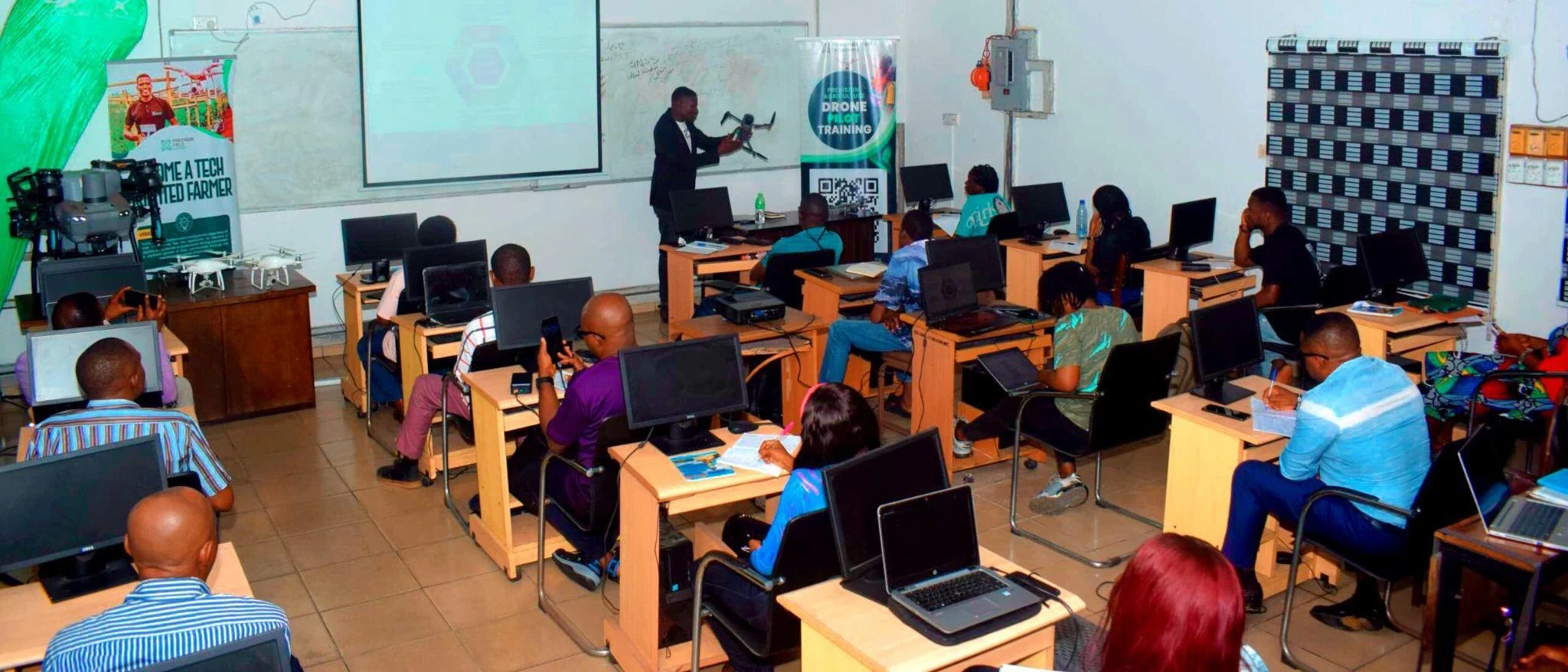
Precision Agriculture Labs: Establish dedicated labs equipped with the latest sensors, drones, and simulation software.
Industry Partnerships: Forge strong partnerships with agricultural equipment companies, tech startups, and large-scale farms. This would provide students with internships and co-op opportunities where they can gain real-world experience and apply their knowledge.
Farm-to-Lab Learning: Create "smart farms" on campus where students can actively participate in every stage of a precision agriculture operation, from data collection to analysis and implementation.
3. Prioritize Faculty Development and Training
To address the faculty knowledge gap, institutions must invest in continuous professional development. This could involve:
Industry Sabbaticals: Allow professors to spend time working directly with agricultural technology companies to gain practical experience.
Certifications: Encourage and fund faculty to pursue certifications in GIS, drone operation, and precision agriculture software.
Mentorship Programs: Pair experienced faculty with younger, tech-savvy instructors to facilitate the transfer of knowledge and skills.
4. Foster an Interdisciplinary Approach
The future of agriculture is not confined to the agriculture department. Universities should encourage interdisciplinary collaboration between agriculture, engineering, computer science, and business departments. A course on agricultural robotics, for instance, could be co-taught by a mechanical engineer and an agronomist, giving students a holistic understanding of the technology. This approach prepares students to work in diverse, cross-functional teams, a reality of the modern agricultural workplace.
5. Make Technology Accessible and Affordable
To make this vision a reality, the high cost of technology must be addressed. Solutions could include:
Grant Funding: Educational institutions should actively pursue government grants and private funding to purchase precision agriculture equipment.
Shared Resources: Collaborations between multiple colleges or universities can allow them to pool resources and share access to expensive technology.
Student Software Licenses: Partner with software companies to provide students with free or discounted licenses for industry-standard programs, allowing them to practice their skills without financial burden.
Conclusion: Why Today's Agriculture Students Are Underprepared for Precision Agriculture
The digital revolution in agriculture is not coming; it is already here. Precision agriculture presents a powerful solution to some of the world's most pressing challenges, including increasing food production for a growing global population and conserving precious natural resources. However, the success of this revolution hinges on the next generation of agricultural leaders.
Are you ready to lead the future of farming? At Precision Field Academy, we are dedicated to equipping you with the skills and knowledge to make a lasting impact. Our comprehensive programs in geospatial technology, data analytics, and sustainable farming systems are designed for ambitious individuals who want to be at the forefront of agricultural innovation. Don't wait for the future, build it with us. Visit Precision Field Academy to learn more about our courses and how you can join the revolution.
Muhammad Bashir Shuaib
More From the Knowledge Hub
What's Next After PFA? Beyond Drone Pilot Certification
Discover the real-world career, entrepreneurship, and consulting pathways unlocked by PFA flight training across African agriculture and enterprise industries.
Is Precision Agriculture Too Expensive? 3 Creative Ways We Are Making AgTech Affordable at PFA
Discarding the myth that precision farming is only for mega-farms. How shared cooperatives, open-source ingenuity, and practical talent make AgTech accessible to every African farmer.
Turn Knowledge Into Commercial Agronomic Mastery
Explore our accredited hands-on precision agriculture courses or apply for our flagship PAIP cohort fellowship today.