
Is Precision Agriculture Too Expensive? 3 Creative Ways We Are Making AgTech Affordable at PFA
Muhammad Bashir Shuaib
Executive Takeaways & Insights
Precision agriculture does not require multi-million Naira investments from individual smallholders.
The PFA Cooperative Model facilitates shared drone and GPS mapping arsenals across farmer clusters.
Open-source tools like QGIS and free Sentinel satellite imagery turn basic laptops into advanced agronomy labs.
Hands-on talent development delivers rapid ROI by preventing costly hardware misuse and reducing chemical inputs by up to 30%.
In the African agricultural landscape, the word "precision" often conjures images of expensive, unattainable technology. This perception is a major barrier to the adoption of a system that can address our most pressing challenges: food insecurity, climate change, and economic volatility. At Precision Field Academy (PFA), we're not just dispelling this myth; we're actively transforming it. By focusing on community, ingenuity, and a new approach to education, we can make AgTech a powerful and affordable tool for every farmer.
1. The PFA Cooperative Model: Shared Resources for Shared Prosperity
The most significant hurdle to adopting AgTech is the capital required to purchase expensive equipment. For an individual farmer, a GPS-guided drone or a professional soil scanner is simply not a viable investment. PFA's solution is not to sell technology to individuals, but to empower communities through our Cooperative Model.
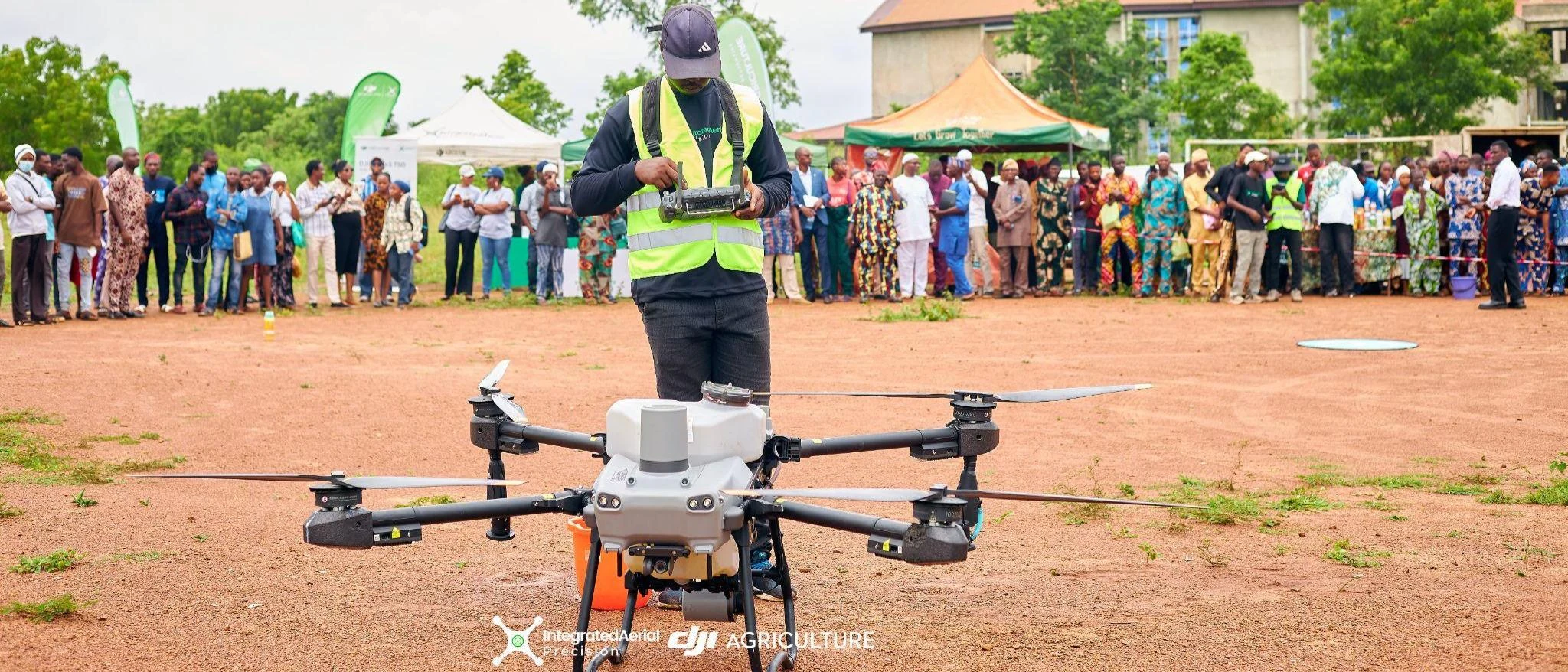
We facilitate the formation of local farming groups and provide them with a shared arsenal of technology. This model allows a single high-quality drone, a professional GPS mapping device, and data analysis software to be collectively owned and operated. Instead of each farmer spending a fortune, they contribute a small, manageable fee to the cooperative. This grants them access to powerful tools and real-time data, making a multi-million Naira investment accessible to farmers who might only cultivate a few hectares. It's a system built on the very African principle that we are stronger together.
2. The PFA Ingenuity Approach: Maximizing What You Already Have
At PFA, we teach our students that the most valuable precision tools are often the ones they already possess. We focus our curriculum on leveraging readily available, low-cost resources to achieve significant results.
We show farmers how to use free GIS software like QGIS to transform a simple laptop into a sophisticated mapping station. Our training teaches them how to integrate free satellite imagery from services like Google Earth Engine to monitor soil health and track crop stress across their land. We also train them to use the smartphone in their pocket as a powerful AgTech device. Using its camera and GPS, farmers can easily collect and geotag critical field data, creating detailed maps of their farm without any additional financial outlay. It's an approach that prioritizes smart thinking over expensive spending.
3. The PFA Incubator: Building a New Generation of AgTech Entrepreneurs
Technology is only as valuable as the person using it. A major reason for low adoption rates is the lack of technical expertise. To address this, PFA has launched a groundbreaking initiative: the fully funded Incubator Program.
This isn't just a training course; it's a strategic investment in the future of African agriculture. We offer drone training scholarships to ambitious young leaders, providing them with comprehensive, hands-on instruction in drone operation, data analysis, and business development. These scholarships cover tuition, equipment, and mentorship, allowing participants to focus solely on mastering their craft. Graduates of the program are not just trained farmers; they are certified AgTech entrepreneurs who can provide affordable precision agriculture services to their communities. This fosters a sustainable, localized ecosystem where knowledge and technology are shared, driving economic growth from the grassroots level.
PFA's Commitment: Our Mission, Our Projects, Our Future
At PFA, our work goes beyond the classroom. We engage our students in real-world projects that directly address the challenges faced by local farmers. Our current projects include:
Mapping for a Better Harvest: We partner with local farming communities to create high-resolution digital maps of their land. These maps identify areas prone to erosion, nutrient deficiencies, or water stress, allowing farmers to apply inputs with surgical precision.
Pest and Disease Surveillance: Our drone training scholarship students are deployed to monitor large tracts of land for early signs of pest infestations or crop diseases, providing timely alerts that can save entire harvests.
Community Data Hubs: We are establishing data centers in rural areas, run by our program graduates, where farmers can bring their field data for analysis and receive personalized, data-driven recommendations.
The success of these projects is a testament to the power of our approach. We are proving that the question is no longer "Is precision agriculture too expensive?" but rather "Are we creative enough to make it affordable?" At Precision Field Academy, we are proving that the answer is a resounding yes. By combining the power of cooperatives, the brilliance of open-source technology, and a commitment to nurturing new talent, we are building a new narrative for African agriculture. We are empowering farmers to move beyond guesswork and into a future of data-driven prosperity.
Join us and be part of the change. Learn more about our fully funded training and drone scholarship programs at Precision Field Academy and take the first step toward a more prosperous harvest.
Muhammad Bashir Shuaib
More From the Knowledge Hub
What's Next After PFA? Beyond Drone Pilot Certification
Discover the real-world career, entrepreneurship, and consulting pathways unlocked by PFA flight training across African agriculture and enterprise industries.
The Future is Here: Why Today's Agriculture Students Are Underprepared for Precision Agriculture and How to Fix It
An in-depth analysis of the widening gap between traditional university agricultural curricula and the data-driven realities of modern digital farming, with actionable solutions.
Turn Knowledge Into Commercial Agronomic Mastery
Explore our accredited hands-on precision agriculture courses or apply for our flagship PAIP cohort fellowship today.